Equine Ownership Portfolio
Lilly Okada
Section 1: Introduction
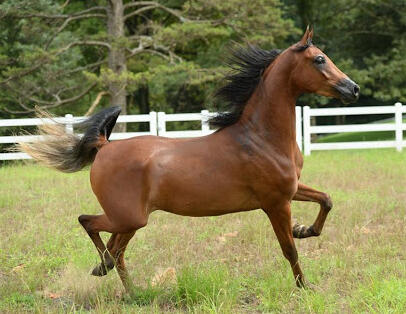
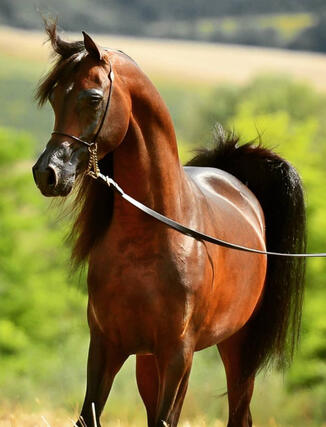
Meet Haku
Haku is an Arabian horse. He is a three year old gelding with a bay coat. In the left photo, you can see his slightly flaxen tail and coronet band on his left forelimb.
Breed History
The Arabian horse is one of the oldest breed of our modern horse. Their origin is still a question of today. Some historians believe they were wild horses in Northern Syria and Southern Turkey, while others believe that their origin is southwest Arabia. All historians do agree that the Bedouins, Arab nomads in the Arabian Peninsula, bred these horses as war mounts. The Bedouins were very selective with their breeding, maintaining their purity for thousands of years. Arabians were and still are beautiful, athletic, and intelligent horses. The newest data on the population of Arabian horses came from the World Arabian Horse Organization in 2014. WAHO reported over 1 million Arabian horses populating sixty-two countries around the world.
Early Training: Getting Comfy with a Saddle
In this session, I will be training Haku to wear a saddle. The objective is to desensitize Haku to the saddle. I want to get him more comfortable with the saddle touching him and then eventually resting on his back. The stimulus is the saddle coming close to him or touching him. The correct response that I will be looking for is that he does not move away or avoid the saddle as the saddle comes close. If he moves away, I will keep the saddle near him as a type of negative reinforcement. If he then displays the right response and stays still, I will move the saddle away and reset. I will keep on repeating this until he is comfortable with me to put it on him without moving. Watch the video below as an example until the two minute mark:
Conformation
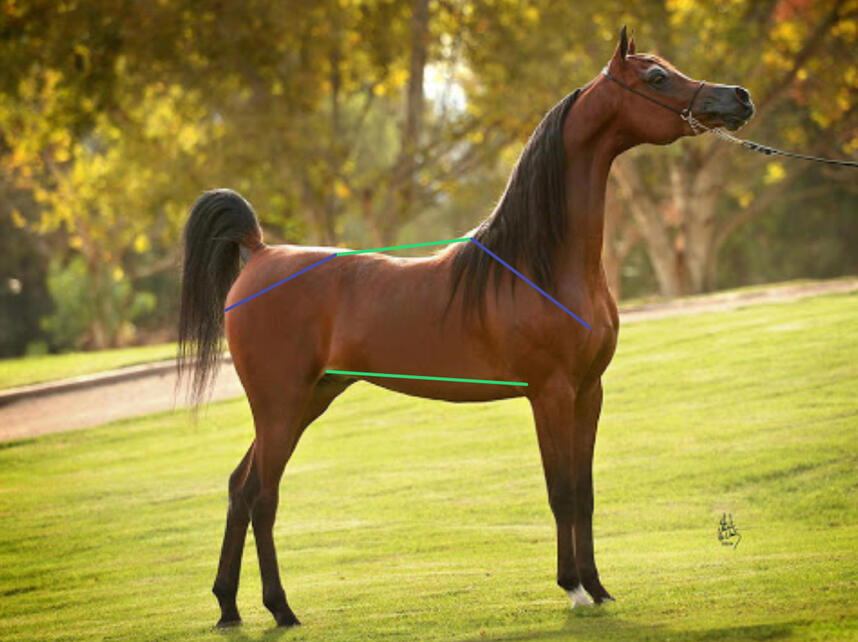
Starting with his head, Haku has a very attractive face with large eyes, small ears, and that very characteristic dished face of Arabian horses. His neck is also characteristic of beautiful Arabians. It is long, sloped, and set high. The angle of his shoulder does approach 45 degrees which is a huge factor in his overall balance. As shown by the green lines in the image above, his topline to bottom line ratio does approach a 1:2 ratio. Haku is very flat through his croup and square in his hips which is an Arabian breed standard. His high tail carriage is also ideal. Overall muscling both in his hindquarters and through his middle third could be increased, but Arabian horses should not be heavily muscled either.
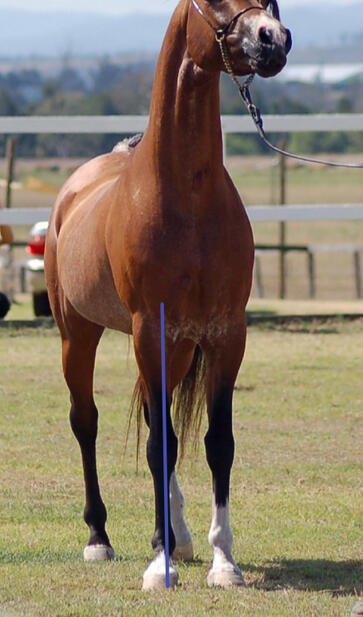
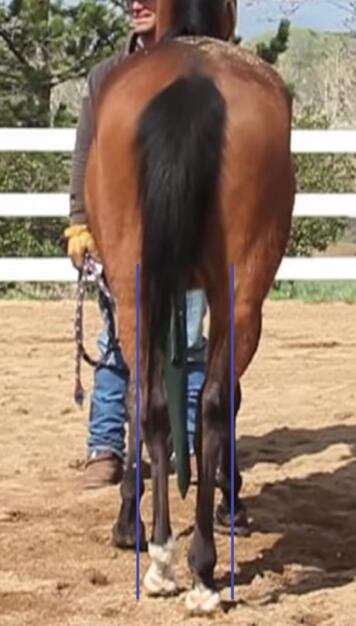
Looking at his forelegs, we can see that Haku is a little turned out. It’s not so severe that I would call him knock-kneed because his knees are in line with his cannons. Then in the back, his hind limbs are a little toed out. You can see that in his right leg more clearly. Also, his cannons are offset. Both of these might be a result from him being base narrow in the back. These characteristics of his hind limbs are not ideal.
Sources:
Arabian Horse Association. Arabian Horses. https://www.arabianhorses.org/discover/arabian-horses/#History%20&%20Heritage. (Accessed 26 September 2020.)
World Arabian Horse Organization. 2014. About the World Arabian Horse Organization. http://www.waho.org/. (Accessed 27 September 2020.)
Arabian Horse Association. 2019. Arabian Conformation. https://www.arabianhorses.org/export/content.export/judges-stewards/js-docs/JSNBConformation.pdf. (Accessed 1 October 2020.)
Section 2: Movement & Detecting Lameness
Normal Movement
Haku has been working on his trot recently! Below is a video of his best performance yet:
The trot has a regular rhythm with only two beats and a period of suspension in between. It is also a diagonal gait with a footfall sequence of left front + right hind then right front + left hind. Here, Haku has the proper rhythm, footfall, and an even cadence that is pleasing to viewers! Normal movement of your horse is always important to know well. This way you can notice any differences in the way they move that could indicate pain or discomfort in your horse.
The Lamenes Evaluation
Knowing how to properly evaluate Haku for any lameness is critical
for the management of his health. By knowing the signs of lameness and catching them early on, he will be able to perform as well and as long as possible. I will use a case study of Lena the 16 year old, Quarter Horse broodmare that was injured as a 2 year old.
1. Obtain the history: A history should include facts such as the onset of the lameness, exactly what were the circumstances, and if they are under any current treatments or medications. So for Lena, we know that she actually has osteoartheritis, or high ringbone. She has also already undergone pastern arthrodesis, or the fusing of the pastern joint.
2. Observe from a Distance: While the owner is sharing the horse's history, the veterinarian will observe the horse's general conformation for obvious muscle atrophy, swelling, or even part of their conformation that puts the horse at a higher risk of injury.
3. Movement Examination: Next, the veterinarian will need the owner to lead the horse in a walk and a trot away and back towards them in a straight line on firm, even ground. As the horse is walking or trotting away, the vet will want to watch for any asymmetry in gait, how their feet track, and how their hips move. Hip hiking is a telltale sign of a hind limb lameness where the hip that is higher while weightbearing is the side with the lameness. Below is a video of a horse hiking their hip as they trot:
As the horse moves towards the veterinarian, key points to look at are asymmetry in their gait or feet tracking and to watch for head bobbing. A horse will lift their head up as the injured limb impacts the ground in order to decrease the weight it bears. Head bobbing is the taletell sign for a forelimb lameness. If the lameness is still not apparent, testing the horse on softer ground, walking/trotting in a circle, or saddleing them may show the lameness more obviously.
For Lena, her lameness was evident as she walked and trotted. She hiked her back left hip as she bore weight on that limb indicating a left hind limb lameness.
4. Hands-on Examination: The goal of a hands-on exam is to find which limb and which area on that limb is causing the lameness. The veterinarian will palpate each limb starting from the ground up to feel for any swelling, heat, distension, or sensitivity in the tendons and joints. They will also palpate along their spine watching for any signs of discomfort.
To further pinpoint the area of lameness, hoof testers and flexion tests are often used. Hoof testers is when the vet will apply pressure all around the hoof and on the frog to elicit a pain response that can tell them exactly where on the hoof the problem is. Flexion tests are used to identify lameness in the joints and tendons of the limbs. Below is an video of a veterinarian performing a flexion test on a horse's left forelimb:
The vet (starting from the bottom up again) will hold the target joint in a flexed position or put pressure on the target tendon for about a minute. Then they will release and make the horse trot off immediately. If the veterinarian applied pressure on the site of lameness, the horse will show an asymmetry in their gait that is then exacerbated.
5. Assigning a Lameness Score: The AAEP scale starts with a 0 as showing no lameness under any circumstances and goes to a 5 where the lameness causes minimal weightbearing. Lena is a 4 on the lameness scale. Her lameness shown through a hip hike was obvious even as she walked.
6. Diagnostics: After the specific area of the horse is identified as the site of lameness, diagnostic tests are used to find what is causing the lameness. Imaging such as ultrasounds or x-rays, nerve and joint blocks, and scintigraphy are some of the common tests.
Lameness Case Study: Diagnosis and Treatment
In our case study, Lena's diagnosis is chronic inflammation of the pastern arthrodesis surgical site on her left hindlimb. Pastern arthrodesis is the surgical fusion of the pastern joint. It is a common treatment for horses with severe and chronic osteoarthritis in their pasterns. However, it is clearly evident that Lena's lameness was not fixed by this surgery. She still cannot perform due to the pain at the site. NSAIDS or non-steroidal anti-inflammatory drugs are one of the most common therapies for chronic pain in horses. Some common NSAIDS used to treat chronic inflammation due to osteoarthiritis are Carprofen, Vedaprofen, and Firocoxib. Another treatment that is being researched more recently is the use of a continuous peripheral nerve blockaged (CPNB). The technique of placing a catheder for continous adminstration of low concentrations of local anesthetic solutions has been used in human medicine for a long time. Techniques of placing the cathedar and studies in the efficacy of this treatment in horses has just begun, yet early studies have shown that CPNB treated horses were less lame than horses that recieved an intermittent peripheral neural blockade during their time of treatment.
Sadly, osteoarthritis is a chronic condition where treatments only slow down the progression of the joint degeneration, not reverse or stop it. Most treatments are injecting the medications directly into the affected joints to protect the joint and decrease swelling. There are some preventative measures horse owners can take to minimize the risk of the horse developing osteoarthritis in the pastern joints, or at least not until old age. Because osteoarthritis often starts with trauma to the joint, one thing is to protect that joint through supplements containing glucosamine and chondroitin sulfate. Owners should also maintain proper trimming of the horse's hooves and a good weight as to not put extra strain on the horse when it is active.
Sources:
Schaer, T. P., L. R. Bramlage, R. M. Embertson, and S. Hance. 2001. Proximal Interphalangeal Arthrodesis in 22 Horses. Equine Vet. J. 33:360-365. doi:10.2746/042516401776249552
Watts, A. E., et al. 2011. Continuous Peripheral Neural Blockade to Alleviate Signs of Experimentally Induced Severe Forelimb Pain in Horses. JAVMA. 238:1032-1039. doi:10.2460/javma.238.8.1032
Section 3: Wellness Program
Haku's Body Condition
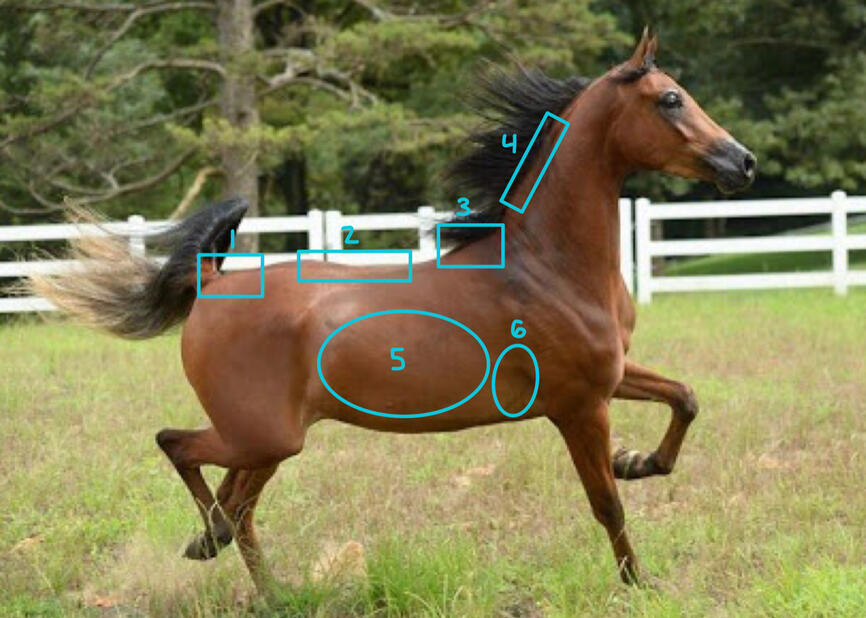
Using the Henneke Body Condition Scoring system, Haku's body condition is evaluated based on the levels of fat in 6 areas:
1. Tailhead: Haku has very little palpable fat on the top of his tailhead but his hook bones are not discernable.
2. Loin: He is level along his spinous processes.
3. Withers: His withers have are a bit rounded but not protruding.
4. Neck: Haku has a smoothly blended neck into his withers.
5. Ribs: None of his ribs can be seen but they are easily palpated.
6. Shoulder: His shoulder area is still defined but not overly thin.
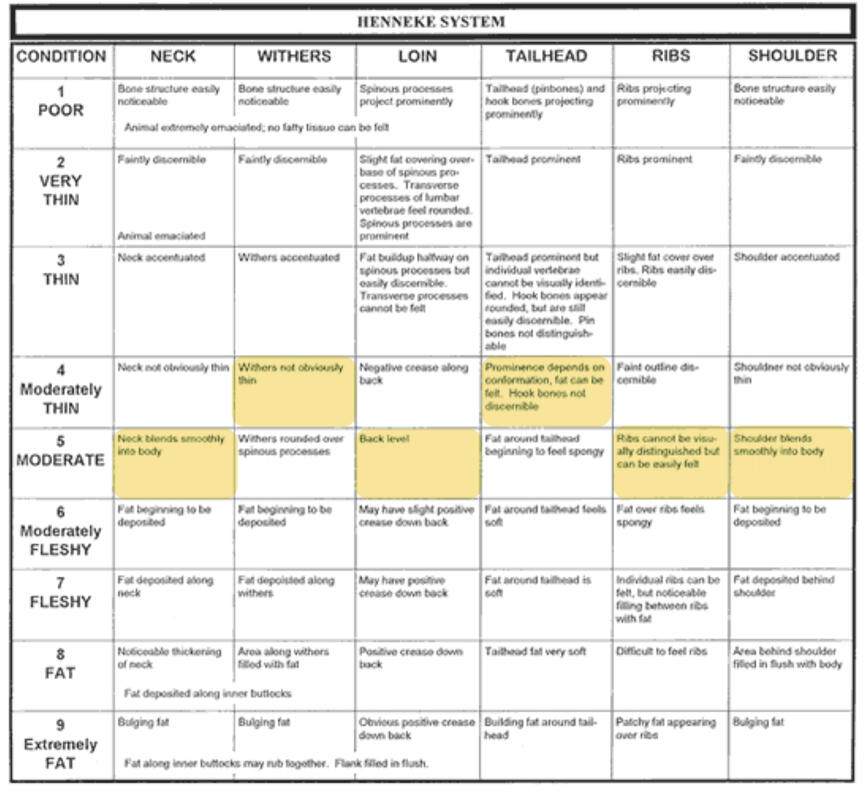
Based on this evaluation, Haku has a body condition score of about a 4.5. He is not completely filled out in certain areas such as the shoulder, tailhead, or withers, but he is also close to a score of 5 based on the evaluation of his back and ribs.
Haku's Daily Diet
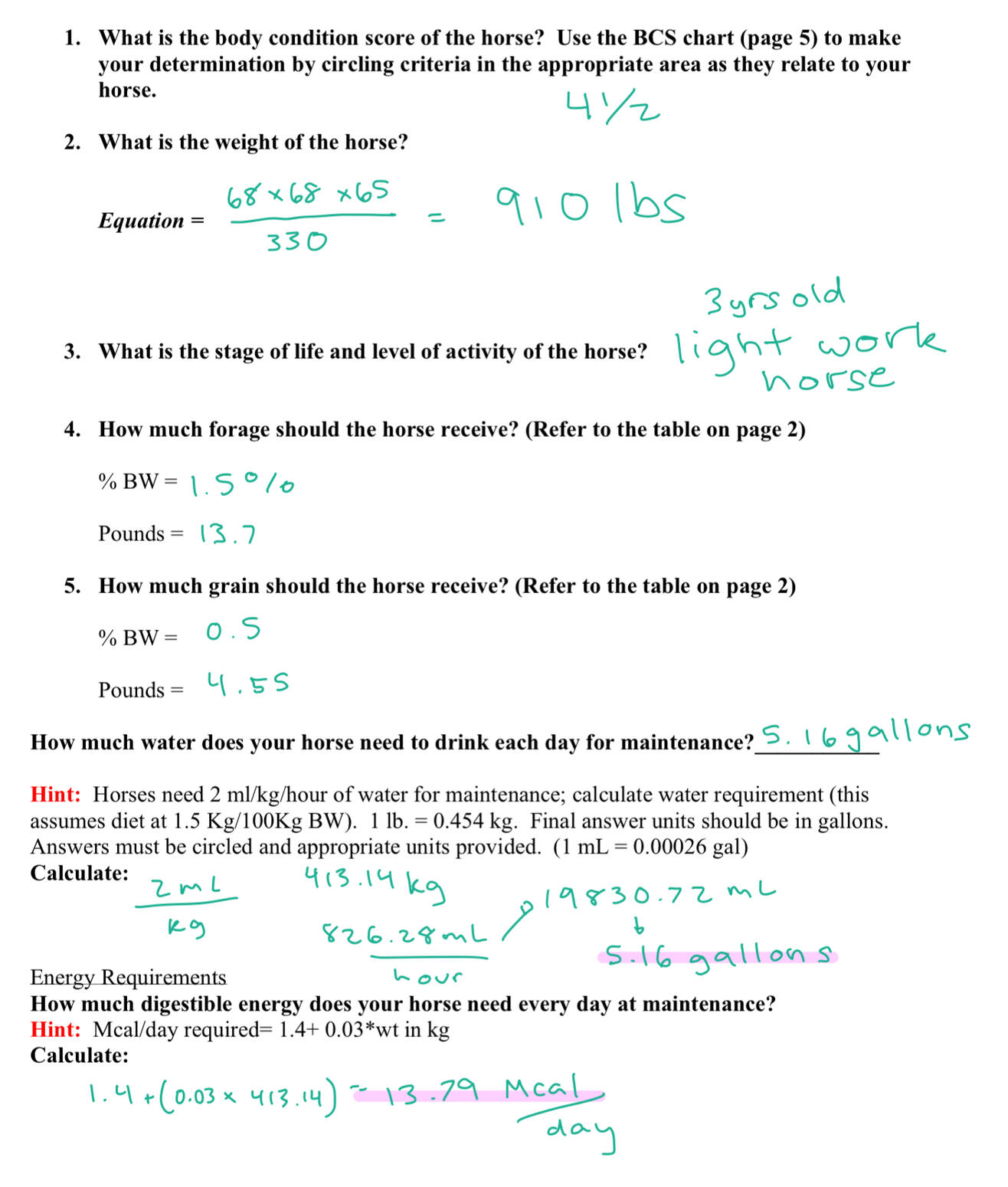
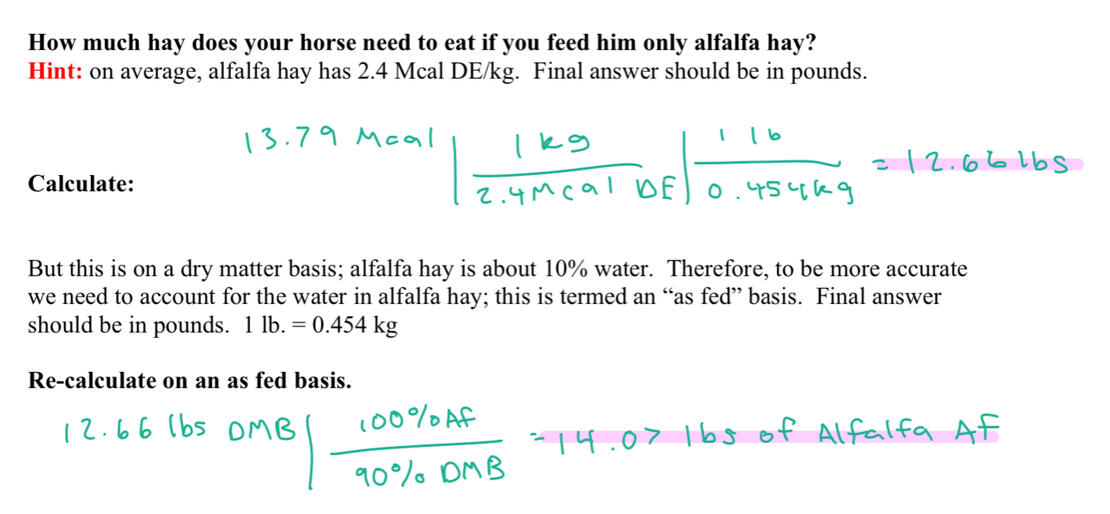
Haku is at the beginning of his training journey to becoming a show horse. This means that his workload is comparably light at this time. Taking into account that he is past his main growing years, he should receive 2% of his body weight with grain comprising 0.5% of his body weight and forage comprising 1.5%. Even though Haku is only doing light work, his concentrate intake will be 0.5% of his daily diet because his body condition score is right under ideal at a 4.5. Haku weighs 910 pounds, so his daily ration should total 18.2 pounds on a dry matter basis. Forages (being the main component of his diet) fed on a dry matter basis should measure between 13.7 pounds per day. These forages would be a mix of grass hays (i.e. Orchard Grass) and alfalfa. Concentrate fed daily should measure to be 4.55 pounds. The concentrate I would use for Haku would be oats. All of his diet calculations can be seen in the worksheet below:
Physical Exam
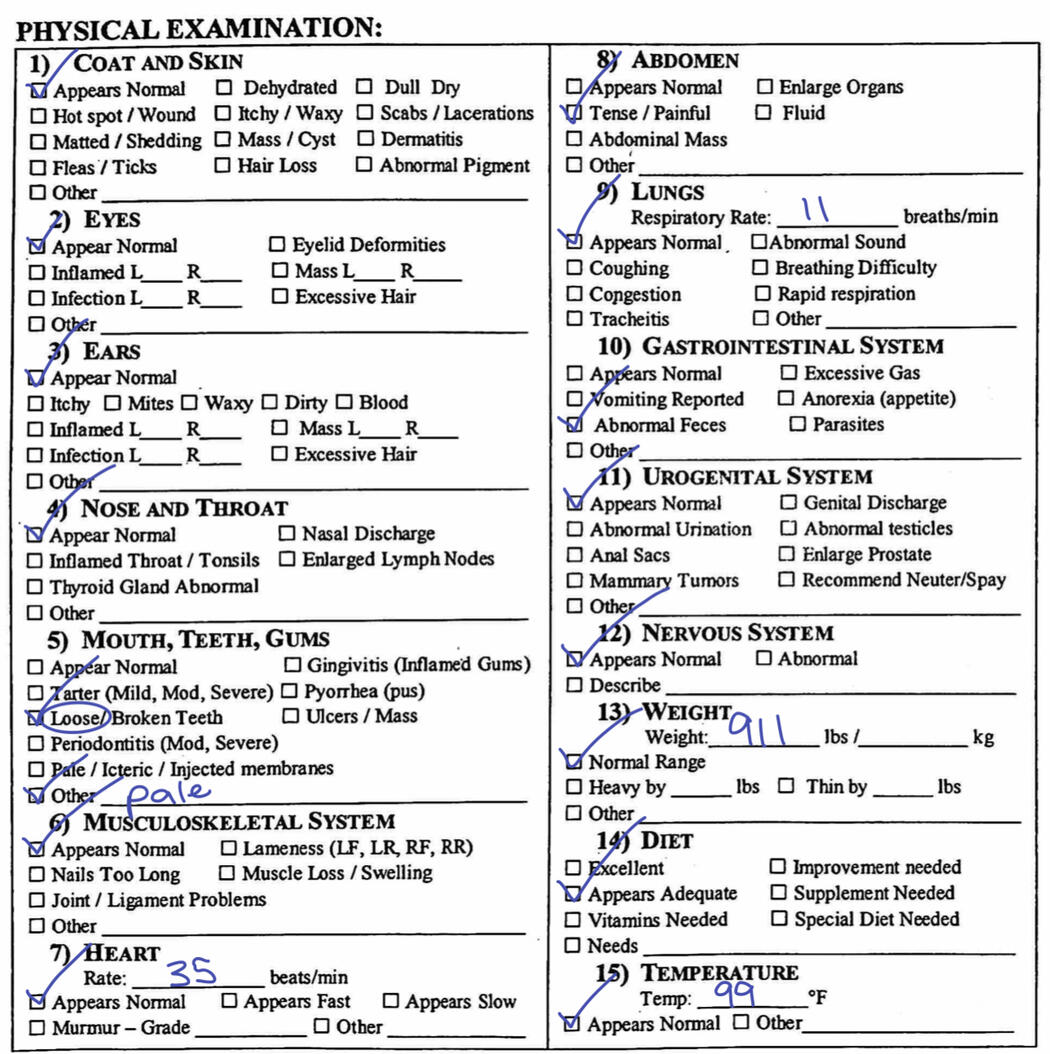
Haku receives a physical exam routinely to establish a baseline of health. That way if any abnormalities arise, however subtle they may be, we can notice them quickly. The main vital signs we will need to measure are his heart rate, respiratory rate, temperature, and capillary refill time. We will also need to assess gut sounds and mucous membranes. Firstly, I will observe Haku to check for any obvious abnormalities such as nasal discharge or irregularities in behavior. I found that his abdomen is irregularly tense, and I have noticed that he has had irregular bowel movements.
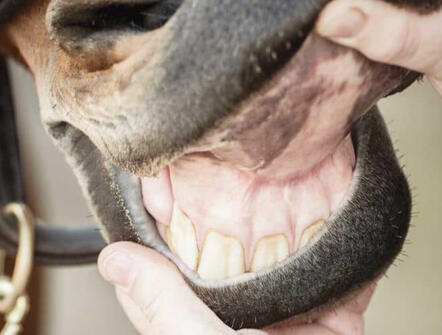
His mucous membranes are then examined for color and moistness. Healthy gums are pink and moist, but his are a little tacky and paler than normal (a shown in the picture to the right) which could indicate dehydration. Capillary refill time is also found by holding down a finger on one spot for 2 seconds. The color should return in about 1 to 2 seconds.
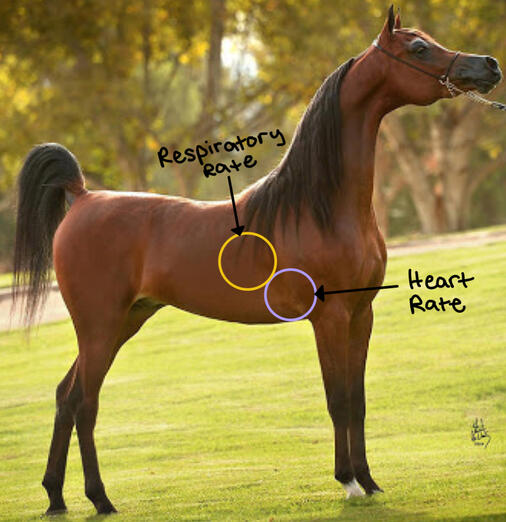
Respiratory rate and heart rate can be found easily using a stethoscope. To find a respiratory rate, the stethoscope should be placed on both sides of the horse's thorax; to find a heart rate, the stethoscope should be placed just behind their left elbow on their thorax. The normal ranges for mature horses are 8-14 breaths per minute and 28-40 beats per minute.
Both Haku's respiratory rate and heart rate were in the healthy range, 11 breaths per minute and 35 beats per minute respectively. Next, gut sounds will be auscultated using a stethoscope against the abdomen on both sides. Occasional, soft grumbles should be heard. Haku had very little gut sounds which could mean that his digesta is not flowing through his GI tract. His temperature will also need to be taken, and the normal range is 99.5 - 100.5 degrees Fahrenheit. Lastly, his limbs will each be examined for any swelling, heat, pain, or injury.
All of Haku's results from his physical exam can be seen in the table below:
Dental Exam
An equine dental exam is necessary for the proper upkeep of your horse. Because they have an elliptical chewing pattern, horses' teeth need to be relatively level without sharp points that might cause injury to the soft tissue as they chew. The exam begins with an overview of their gums and dentistry. Here, you can lift up their upper and bottom lip in order to estimate the age of the horse. The first check is looking at whether they have deciduous or permanent teeth. Deciduous teeth are whiter and twice as wide than long; permanent teeth are more yellow and longer than they are wide. Deciduous teeth errupt in this order: centrals at 8 days, intermediates at 8 weeks and corners at 8 months. Permanent teeth errupt at 2.5, 3.5, and 4.5 years old. If the horse has all permanent teeth, then they are at least 5 years old. The second parameter of dental aging is the disappearance of cups. Cups are these dark areas on the surface of permanent teeth as shown in the image below.
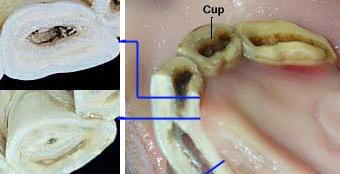
The central incisor cups will be gone around 6 years, intermediates around 7 years, and corners around 8 years. By year 10, most horses will not have any cups present. The third parameter to look at is their angle of incidence, or how angled their bite is from a profile view of their dentition. As they get older, the jaw angle gets more acute. A product of the increasing jaw angle is the 7-year-old hook that is a product of uneven wear. The shape of their tooth surfaces also change over time. At 11 years, all of their teeth will have changed from more ovular to circular. By 20 years, the incisor surfaces will have all become triangular.
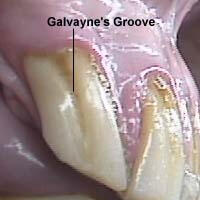
The last parameter to narrow down an age is the length of their Galvayne's Grooves as shown to the left. They will first appear around year 10, be half way down the tooth at 15, and all the way down the tooth by 20.
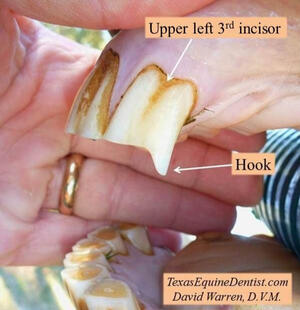
After the dental aging process, the horse will need proper sedation in order to prepare for floating. Once sedated, you will need to flush the mouth of any extra feed stuck in there, and then use a speculum to prop open the horse's mouth. During this time, you can evaluate the horse's cheeks and gums for any signs of injury or infection, and then evaluate the evenness of their dentistry. Things to look out for are hooks forming on the outer incisors, sharp enamal points, and a wave mouth. Three examples of these dental issues are shown below:
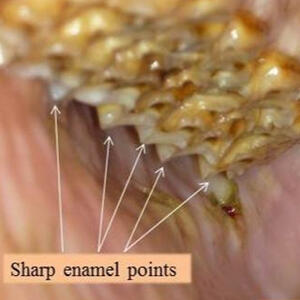
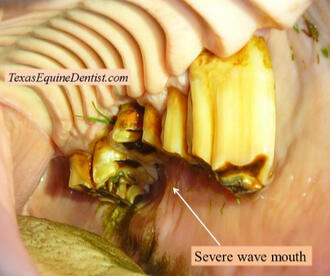
These dential issues will need to be addressed using a dental float. The instrument consistes of a metal file at the end of a long handle. The veterinarian will then shave down the sharp points, uneven teeth, and hooks just enough. Over floating can cause severe damage to a horse's dentition and should be avoided. The goal of floating is to make their elliptical chewing path smooth for grinding their food efficiently and without injury. Yearly examinations should be carried out by a veterinarian, and floating should be done if the veterinarian sees an issue. With proper dental care and prevention, the horse will efficiently use their feed, perform without hinderance, and be healthier for longer.
Vaccination Schedule
Haku is a previously vaccinated, 3-year-old Arabian horse in Northern California. In California, the core vaccines for an adult horse are Tetanus, Rabies, Western and Eastern Encephalomyelitis, and West Nile. All of these core vaccines will be administered once a year as boosters. The Western and Eastern Encephalomyelitis and West Nile boosters need to be administered in spring before mosquito season. Even though Haku has not yet started showing around the country, he will be in the next year. This means he will be at a higher risk of exposure to viruses as he travels and meets a lot of new horses. So, Haku's risk vaccines will include Equine Influenza, Strangles, and Equine Herpesvirus, as all of these are recommended for horses who are at higher risk. The Equine Influenza and Equine Herpesvirus boosters should be administered 3 times a year as they are highly contagious viruses. Strangles will be administered semi-annually.
Deworming Schedule
Haku will not be using a rotational deworming schedule because it results in over-deworming and the parasites developing a resistance. Instead, I will perform fecal egg count once a year to see what parasites are common in my area and if Haku is a high or low shedder. From previous fecal egg counts, I know that Haku is a low shedder. So, he will need to be dewormed 2 times a year. To test the effectiveness of the dewormers administered, I will also perform a fecal egg count after deworming. Other precautions such as maintaining a clean stable and feeding via a slow feeder will also help keep Haku healthy!
Genetic Disorder Testing
The Arabian horse breed are more genetically predisposed to 3 different disorders: Severe Combined Immunodeficiency (SCID), Cerebellar Abiotrophy (CA), and Lavender Foal Syndrome (LFS). Severe Combined Immunodeficiency (SCID) is highly lethal. These foals that are affected are born without a functioning immune system, thus they are very susceptible and die of common infectious diseases. They are often euthanized very young. Cerebellar Abiotrophy (CA) affects a foal's neurologic system. Signs of the disease are not present at birth but develop to include exaggerated movement of their forelegs, inability to balance, and a head tremor. These horses affected are either euthanized or kept as pasture pets. Lavender Foal Syndrome (LFS) is another neurologic disorder but unlike CA, it is very lethal. The signs are very similar to those of tetanus: spurts of rigidity and spasms. It is called Lavender Foal Syndrome because the foals who are affected by it often have a pale lavender, pink, or silver skin tone. Because these foals will die quickly, they are often euthanized humanely. Haku will be needing to get genetically tested for these disorders to see if he is or is not a carrier. If he is, it would be best to not use him for breeding.
Intake Procedures & Outbreak Prevention
On top of having an individualized vaccination and deworming schedule, the facility that Haku stays in needs to have proper biosecurity to decrease the amount of exposure to infectious agents. There are multiple management techniques to be implemented. Pastures and stalls need to be cleaned once a week to prevent excess exposure to parasites, bacteria, and flies. Because Haku is an only child at this point, I do not have the space of quarantine. As I own more horses, a quarantine stall and area will be created. It will be used for isolating horses coming back from travel, new horses who have an unknown health history, or sick horses. This way unnecessary exposure of non-traveling, healthy horses is avoided. There would also need to be a protocol of correct sanitation as caretakers move in and out of the quarantine space. Disposable gloves, separate boots, hand sanitization, and separate equipment will be needed. Another improvement to my facility as the population of horses increases would be an improvement of the stalls to allow ease of cleaning. Correct sloping and placement of drains would need to be put into place.
Illness Case Study
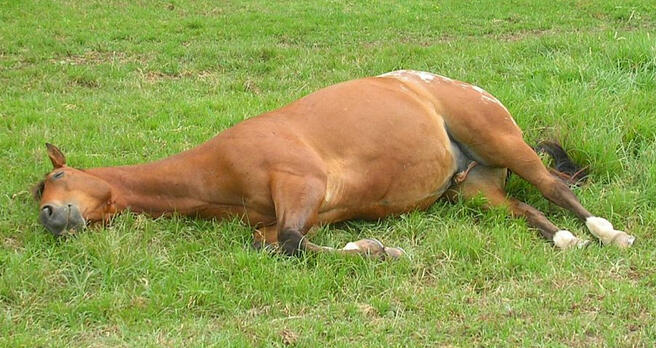
As the consulting equine veterinarian, we are presented with a 16-year-old Quarter horse mare. The client informs us that she has been in lateral recumbency this morning. Below is an image of a horse in lateral recumbancy:
Otherwise, she has been acting normal, eating when offered food, and vocalizing to the other horses. More information is needed.
Some crucial follow up questions include:
1) Has the horse had normal bowel movements and urination in the last 48 hours?
2) What is the horse's vaccination history?
3) Are there any other mares showing the same signs as she?
4) What does her current diet consist of?
5) Do you see any wounds, nasal or eye discharge, coughing or vomiting?
We were able to recieve her history. She was born in raised in Canada where they have had mosquito problems during late summer. She has been vaccinated against tetanus, Eastern, Western, and Venezuelan equine encephalomyelitis. Lastly, 10 days earlier, another geriatric gelding Thoroughbred was euthanized who presented with a similar inability to rise.
Physical Examination
The mare had to be sedated due to involuntary thrashing which progressed 12 hours after initial findings. Initially, we tried to assist her in moving from lateral recumbency to sternal recumbency but were unable to do so. By then, she was unresponsive to most stimuli. The only external damage seen was a large hematoma on the right side of her face likely due to her convulsions. Next, we took her vitals. Her temperature was 98 degrees F, heart rate was 68 beats per minute, and respiratory rate was 16 breaths per minute. Lastly, her rectum was full of feces indicating irregular bowel movements.
Signs of the Disease
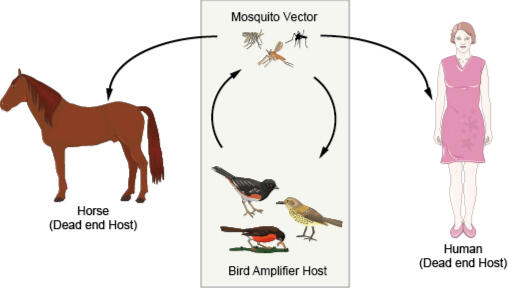
The first red flag was in her history. She was not vaccinated with two core vaccines that cause neurological disease: rabies and west nile virus. Both of these viruses are also transmitted using mosquitoes as a vector, and mosquitoes are a problem where these horses live. I ruled out rabies for two reasons. First, rabies is a highly contagious disease that can be transmitted directly from horse to horse through saliva. However, only one other horse presented with the same signs. This is more consistent with the horse being a dead end host or cannot pass the illness directly. The west nile virus transmission cycle is layed out below and shows how the horse is a dead end host:
Secondly, infected horses normally present with a low grade fever, but this mare's temperature was in the normal range.
Signs that she contracted west nile virus were:
1) The sudden onset and progression becuase horses in the early stages of WNV are often asymptomatic.
2) Convulsions because WNV causes neurologic issues.
3) Ataxia that progressed to complete inability to rise.
Diagnostics, Treatment, and Prevention
The IgM antibody or IgG ELISA tests are the most common and useful diagnostic tests for live horses. Unfortunately, this mare did not respond to any palliative care and continued to decline in health so she had to be humanely euthanized. Post mortem diagnostics were then carried out. The most common test is a PCR or polymerase chain reaction to test for the nucleic acids of the virus in the brainstem of the horse. Because this disease does not have any specific treatment, owners need to focus on preventing the disease. Thankfully, there is a developed vaccine for WNV. This vaccine is considered a core vaccine by the American Association of Equine Practitioners. Furthermore, owners can control mosquito populations using repellents, fans, screens, and eliminating stagnant water, weeds, and manure regularly.